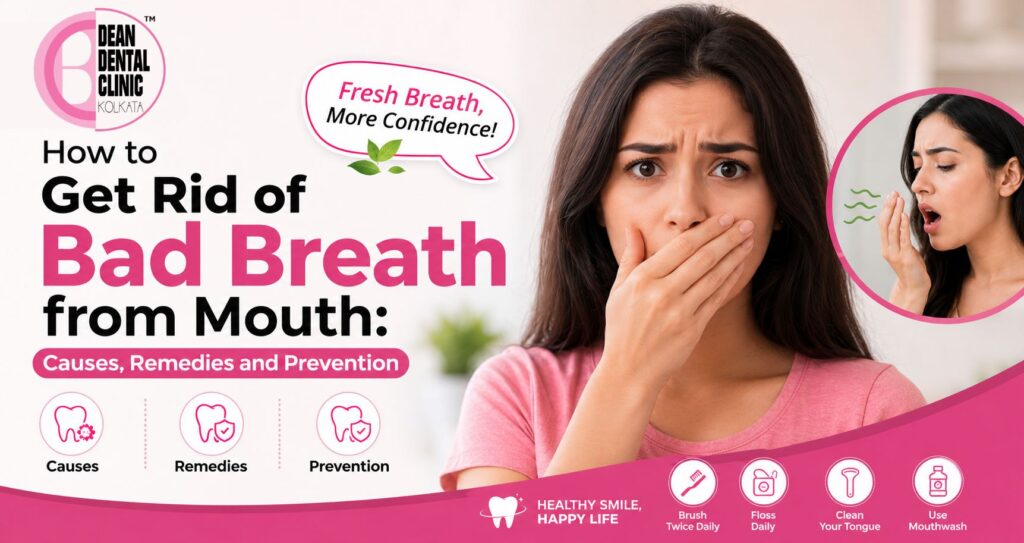
Bad breath, medically known as halitosis, is a common oral health concern that can affect confidence, social interactions, and even professional communication. While occasional bad breath after eating strongly flavoured foods is normal, persistent mouth odour may indicate an underlying dental or oral health problem.
If you are wondering how to get rid of bad breath from mouth, the solution usually begins with identifying its cause. Improving oral hygiene, cleaning the tongue, staying hydrated, and getting regular dental check-ups can help manage many common causes. However, persistent bad breath should not be ignored.
What Causes Bad Breath from the Mouth?
Bad breath does not always come simply from “not brushing enough.” Several factors can contribute to unpleasant mouth odour.
1. Poor Oral Hygiene
Food particles can become trapped between teeth, around the gums, and on the tongue. Bacteria break down these particles and release unpleasant-smelling compounds, resulting in bad breath.
Skipping brushing, flossing, or regular dental cleaning can therefore increase the risk of persistent mouth odour.
2. Bacteria on the Tongue
The tongue has a textured surface where bacteria and food debris can accumulate. Even if you brush your teeth regularly, ignoring your tongue may contribute to bad breath.
Gently cleaning the tongue with a toothbrush or tongue cleaner can help reduce this bacterial buildup.
3. Gum Disease
Bad breath can sometimes be an early warning sign of gum problems. Plaque accumulation around the gumline can cause inflammation, bleeding and unpleasant odour.
If you notice bad breath along with swollen, tender or bleeding gums, a dental examination is advisable.
4. Dry Mouth
Saliva naturally helps wash away food particles and bacteria. When saliva production decreases, bacteria can accumulate more easily, potentially causing bad breath.
Dry mouth can occur due to dehydration, mouth breathing, certain medicines or other conditions.
5. Food and Beverages
Garlic, onions, certain spices, coffee and other strongly flavoured foods can temporarily affect breath. In these situations, the odour generally improves as the substances leave the mouth and body.
6. Dental Problems
Untreated cavities, broken teeth, infected teeth, poorly fitting dental appliances and other oral problems may contribute to persistent mouth odour. Treating the underlying dental condition is often more effective than simply masking the smell with mouthwash.
How to Get Rid of Bad Breath from Mouth Naturally and Effectively
If your bad breath is related to everyday oral hygiene, several simple habits can make a noticeable difference.
1. Brush Your Teeth Twice a Day
Brush your teeth for approximately two minutes in the morning and before going to bed using fluoride toothpaste. Pay attention to the front, back and chewing surfaces of your teeth as well as the gumline.
Brushing regularly helps remove plaque and food particles that can contribute to unpleasant odour.
2. Clean Your Tongue Every Day
Tongue cleaning is one of the easiest steps to add to your oral hygiene routine. Use a tongue scraper or toothbrush gently across the surface of your tongue.
Avoid excessive pressure because aggressive scraping can irritate the tongue.
3. Floss or Clean Between Your Teeth
A toothbrush cannot effectively clean every space between teeth. Food debris and plaque can remain between teeth and around the gums.
Daily flossing or using an appropriate interdental cleaning device can help keep these areas cleaner and reduce sources of bad breath.
4. Drink Plenty of Water
Adequate hydration supports normal saliva production and helps rinse away food particles and bacteria.
If your mouth frequently feels dry, keep water available throughout the day and discuss persistent dry mouth with a dental professional.
5. Avoid Smoking and Tobacco
Tobacco can contribute to unpleasant breath while also increasing the risk of gum disease and other oral health problems. Quitting tobacco is an important step towards better oral and overall health.
6. Limit Foods That Trigger Temporary Odour
If certain foods consistently cause strong breath odour, reducing them before important meetings, appointments or social occasions may help.
However, if bad breath continues even after avoiding these foods, the problem may have another cause.
7. Don’t Rely Only on Mouthwash
Mouthwash can provide temporary freshness, but it should not be considered a replacement for brushing, tongue cleaning and cleaning between the teeth.
If persistent bad breath is caused by gum disease, tooth decay or another dental problem, treating that condition is more important than simply covering up the smell.
Can Bad Breath Be a Sign of a Dental Problem?
Yes. Persistent bad breath can sometimes indicate an oral health issue that needs professional attention.
For example, gum disease, tooth decay, dental infection or plaque buildup may produce unpleasant odours. If your breath remains unpleasant despite maintaining good oral hygiene, schedule a dental examination.
A dentist can examine your teeth, gums, tongue and other oral tissues to determine whether there is an underlying cause.
When Should You See a Dentist for Bad Breath?
Occasional bad breath is usually not a reason for concern. However, consider visiting a dentist if:
- Bad breath continues despite regular brushing
- Your gums bleed while brushing or flossing
- Your gums appear swollen or tender
- You have persistent tooth pain
- You notice pus or swelling around a tooth
- You have a persistent bad taste in your mouth
- Your teeth feel loose
- You frequently experience dry mouth
- Bad breath returns soon after brushing
If severe facial swelling, difficulty swallowing or difficulty breathing occurs with a dental problem, seek urgent medical attention.
How Does a Dentist Treat Persistent Bad Breath?
Treatment depends on the underlying cause. During a dental evaluation, the dentist may look for plaque and tartar buildup, cavities, gum disease, infections and other oral conditions.
Depending on the findings, treatment may include professional cleaning, treatment for gum disease, restoration of decayed teeth, treatment of an infected tooth, or recommendations for improving daily oral hygiene.
This is why simply using breath mints or mouthwash may not solve chronic halitosis.
How to Prevent Bad Breath from Coming Back
Once you know how to get rid of bad breath from mouth, prevention becomes equally important.
Follow a consistent oral care routine:
- Morning: Brush with fluoride toothpaste and clean your tongue.
- During the day: Drink water regularly and maintain good oral hygiene after meals when possible.
- Night: Brush thoroughly and clean between your teeth before sleeping.
- Regularly: Visit your dentist for professional examinations and cleaning as recommended.
A balanced diet and avoiding tobacco can also support better oral health.
FAQs:
How can I get rid of bad breath quickly?
Brush your teeth and tongue, clean between your teeth, drink water and rinse your mouth. These measures can provide temporary improvement. If the odour keeps returning, identify and treat the underlying cause rather than relying on breath fresheners.
Why does my breath smell even after brushing?
Bad breath after brushing may be related to bacteria on the tongue, food trapped between teeth, gum disease, dry mouth, cavities or other oral conditions. Persistent symptoms should be assessed by a dentist.
Does drinking water help bad breath?
Yes. Water helps maintain moisture in the mouth and can help wash away food particles. Staying hydrated may be particularly useful when dry mouth contributes to unpleasant breath.
Can bad breath come from the stomach?
Most persistent bad breath originates in the mouth, particularly from bacteria, gum problems, tongue coating or dental conditions. Digestive or medical conditions can occasionally contribute, so persistent unexplained symptoms deserve professional evaluation.
Is bad breath a sign of gum disease?
It can be. Bad breath may occur alongside gum disease, particularly when plaque and bacteria accumulate around inflamed gums. Bleeding or swollen gums should be checked by a dentist.
Get Professional Help for Persistent Bad Breath
Knowing how to get rid of bad breath from mouth starts with good daily oral hygiene, but recurring mouth odour should not simply be masked. Healthy teeth, gums and tongue are essential for fresh breath and long-term oral health.
If bad breath continues despite maintaining a proper oral care routine, Dean Dental Clinic can help identify potential dental causes and recommend appropriate care. A professional dental assessment can help determine whether plaque, gum disease, tooth decay, infection or another oral condition is contributing to the problem.
Don’t let persistent bad breath affect your confidence. Book a dental consultation and take the first step towards a healthier, fresher smile.
Read More: