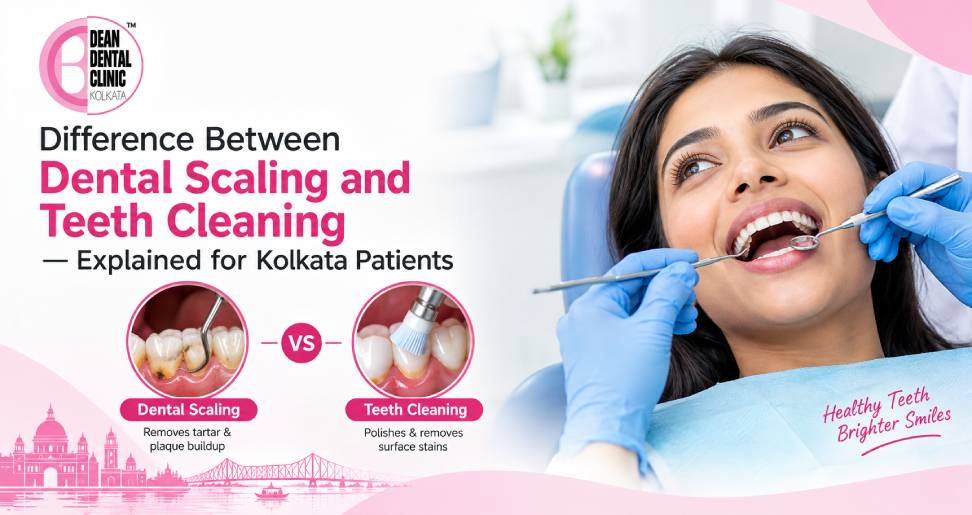
Many people in Kolkata use the terms dental scaling and teeth cleaning interchangeably. While both are related to maintaining good oral hygiene, they are not always the same procedure. Understanding the difference can help you choose the right dental treatment and maintain healthier teeth and gums.
Whether you live in Salt Lake, New Town, Rajarhat, Ballygunge, Gariahat, Behala, or another part of Kolkata, regular professional dental care can help prevent common oral problems such as plaque buildup, tartar, gum inflammation, and bad breath.
What Is Teeth Cleaning?
Teeth cleaning is a general term used for professional cleaning of the teeth at a dental clinic. It is usually recommended to remove plaque, surface stains, food deposits, and other buildup that regular brushing and flossing may not completely eliminate.
During a routine cleaning, a dentist or dental hygienist may examine your teeth and gums before cleaning them. The teeth may then be polished to make their surfaces smoother and remove some external stains.
Professional teeth cleaning is commonly recommended as part of preventive dental care. Even if your teeth look clean, plaque can accumulate in areas that are difficult to reach with a toothbrush.
What Does Routine Teeth Cleaning Involve?
Depending on your oral condition, a routine cleaning may include:
- Examination of the teeth and gums
- Removal of soft plaque
- Cleaning around the gumline
- Removal of minor surface deposits
- Teeth polishing
- Oral hygiene guidance
Routine cleaning is generally suitable for people who have relatively healthy gums and limited tartar buildup.
What Is Dental Scaling?
Dental scaling is a professional procedure specifically designed to remove hardened deposits called tartar or dental calculus from the teeth.
Plaque is a soft, sticky film that forms naturally on teeth. When plaque is not adequately removed, it can harden over time and become tartar. Unlike ordinary plaque, tartar cannot usually be removed effectively with a toothbrush at home.
Dentists use specialized instruments, often ultrasonic scaling equipment, to loosen and remove these hardened deposits.
Scaling is particularly useful when tartar has accumulated around or below the gumline.
Dental Scaling vs Teeth Cleaning: What Is the Difference?
The main difference is the type and amount of deposits being removed.
| Dental Scaling | Routine Teeth Cleaning |
|---|---|
| Primarily focuses on removing hardened tartar | Generally focuses on plaque, surface deposits and stains |
| Often needed when significant calculus has accumulated | Commonly used for routine preventive maintenance |
| Uses specialized dental instruments | May involve cleaning and polishing |
| Can be recommended for patients with gum problems | Often suitable for patients with generally healthy gums |
| May require more extensive cleaning depending on the condition | Usually a relatively straightforward preventive procedure |
It is important to remember that dental terminology can vary between clinics. A dentist may use the phrase “teeth cleaning” to describe a professional cleaning appointment that includes scaling and polishing.
Therefore, the best way to understand what you need is to have your teeth and gums examined by a qualified dental professional.
Why Does Tartar Need Professional Removal?
Tartar is firmly attached to the tooth surface. Brushing and flossing can help prevent plaque from hardening, but once calculus has formed, home brushing generally cannot remove it completely.
If tartar remains around the gumline, it may contribute to gum irritation and inflammation. Some patients may notice symptoms such as:
- Red or swollen gums
- Bleeding while brushing
- Persistent bad breath
- Tender gums
- Visible yellow or brown deposits near the teeth
- Gum recession in more advanced cases
Professional scaling can remove these deposits and make it easier to maintain good oral hygiene at home.
Is Dental Scaling Painful?
Many patients in Kolkata worry that scaling will damage their teeth or be extremely painful. In most routine cases, scaling is well tolerated.
You may experience some sensitivity during or after the procedure, especially if you have sensitive teeth, gum inflammation, or substantial tartar buildup. The level of discomfort can vary depending on your individual oral condition.
If your gums are already inflamed or the deposits extend below the gumline, your dentist may recommend a more thorough periodontal cleaning rather than a simple routine cleaning.
Does Scaling Damage Tooth Enamel?
A common misconception is that dental scaling removes the enamel of the teeth or makes teeth weaker.
Professional scaling is intended to remove plaque and calculus deposits from the tooth surfaces. When performed appropriately by a trained dental professional, it does not mean that healthy enamel is being intentionally removed.
Some patients may feel that their teeth are slightly rough or sensitive after scaling. This can happen because deposits that had covered parts of the tooth have been removed, exposing the actual tooth surface.
How Often Should Kolkata Patients Get Their Teeth Professionally Cleaned?
There is no single schedule that is appropriate for everyone. The frequency of professional dental cleaning depends on factors such as:
- Oral hygiene habits
- Tartar buildup
- Gum health
- Smoking or tobacco use
- Diet
- Previous dental problems
- Existing gum disease
- Your dentist’s recommendations
For some people, routine professional cleaning may be recommended periodically as preventive care. Patients with gum disease or a higher risk of tartar buildup may need more frequent professional monitoring and cleaning.
What Should You Do Before and After Scaling?
Before scaling, tell your dentist if you have sensitive teeth, gum bleeding, dental restorations, or any other oral concerns.
After cleaning or scaling, your dentist may recommend:
- Brushing twice a day with a suitable toothbrush
- Cleaning between your teeth regularly
- Limiting excessive sugary foods and drinks
- Avoiding tobacco products
- Drinking sufficient water
- Following any specific advice given by your dentist
If you experience temporary sensitivity after the procedure, your dentist can recommend appropriate measures based on your condition.
When Should You Visit a Dentist in Kolkata?
You should consider scheduling a dental examination if you notice persistent gum bleeding, bad breath, tooth sensitivity, visible tartar, swollen gums, or discomfort while eating.
Even when you do not have noticeable symptoms, regular dental check-ups can help identify problems at an earlier stage.
Patients searching for dental scaling in Kolkata should avoid choosing a clinic based only on price. The type of cleaning you need should first be determined through an examination of your teeth and gums.
Final Thoughts
Dental scaling and teeth cleaning are closely related but can refer to different aspects of professional oral hygiene care. Teeth cleaning is a broader term for professional cleaning, while scaling specifically focuses on removing hardened tartar and calculus.
If you are unsure whether you need routine cleaning, scaling, or a more comprehensive periodontal treatment, consult a qualified dentist. A proper examination can help determine the condition of your teeth and gums and the most suitable cleaning approach.
For Kolkata patients, maintaining regular brushing, flossing, professional dental care, and timely dental check-ups can play an important role in keeping your teeth and gums healthy.