Maintaining good oral hygiene involves more than brushing and flossing every day. Professional dental care is also important for removing buildup that regular brushing cannot completely eliminate. Two terms you may often hear at a dental clinic are dental scaling and teeth cleaning. While people sometimes use these terms interchangeably, they can refer to different levels of professional oral care.
Understanding the difference between dental scaling and teeth cleaning can help you know what treatment may be recommended for your teeth and gums. In this article, we will explain what each procedure involves, how they differ, and when you may need them.
What Is Teeth Cleaning?
Teeth cleaning is a routine preventive dental procedure designed to maintain oral hygiene and remove common deposits from the teeth. During a professional cleaning appointment, a dentist or dental hygienist examines your teeth and cleans areas that may be difficult to reach with regular brushing.
A routine cleaning generally focuses on removing:
- Soft plaque
- Surface stains
- Food particles
- Minor deposits around the teeth
Professional cleaning can help keep the teeth looking cleaner and support healthy gums. It is commonly recommended as part of regular preventive dental care.
Even if you brush twice a day, plaque can accumulate in areas between teeth and close to the gumline. If plaque remains for too long, it can harden into tartar, which cannot be effectively removed with a normal toothbrush.
What Is Dental Scaling?
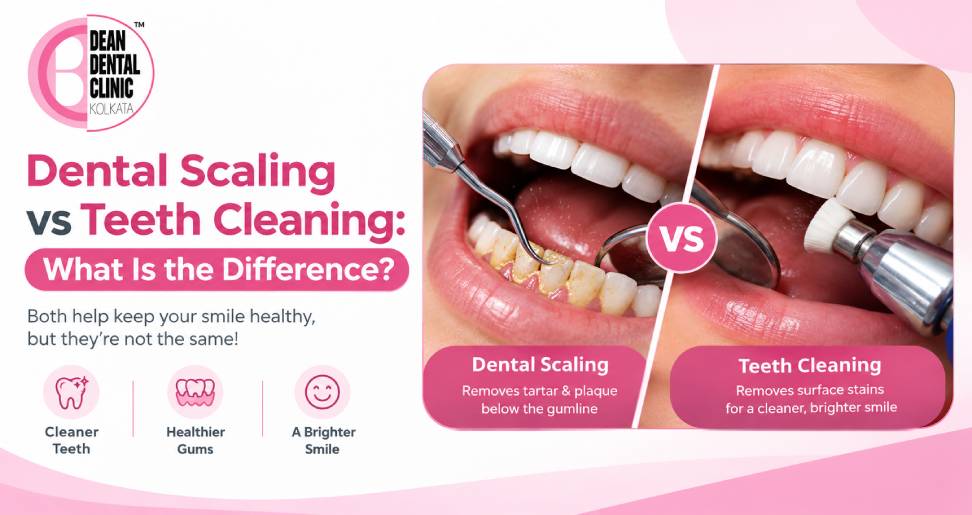
Dental scaling is a more focused procedure used to remove hardened tartar or calculus from the teeth. Tartar develops when plaque becomes mineralized and hardens over time. Unlike soft plaque, tartar cannot usually be removed through brushing or flossing at home.
During scaling, dental professionals use specialized instruments to carefully remove deposits from the tooth surfaces. Depending on the amount and location of buildup, scaling may involve cleaning around the gumline and, when necessary, below it.
Scaling is particularly important for people who have significant tartar buildup or signs of gum disease.
Dental Scaling vs Teeth Cleaning: The Main Difference
The primary difference is the type and amount of buildup being removed and the condition of the gums.
Teeth cleaning is generally associated with routine preventive maintenance. It helps remove plaque, surface stains, and minor deposits.
Dental scaling specifically targets hardened tartar and calculus that cannot be removed through normal brushing.
In some dental practices, the term “teeth cleaning” may be used broadly to describe professional cleaning that includes scaling. Therefore, the exact treatment provided can depend on your oral health condition and the terminology used by the dental clinic.
When Do You Need Routine Teeth Cleaning?
Routine professional cleaning may be suitable when your teeth and gums are generally healthy and there is only a small amount of plaque or surface buildup.
You may benefit from regular cleaning if you:
- Brush and floss regularly
- Have healthy gums
- Have limited tartar buildup
- Notice surface stains on your teeth
- Want to maintain good oral hygiene
- Want professional monitoring of your oral health
Regular dental visits can also help your dentist identify early signs of cavities, gum problems, or other oral health concerns.
When Is Dental Scaling Recommended?
Scaling may be recommended when there is noticeable tartar accumulation or when your dentist finds signs of gum inflammation.
Common signs that may indicate the need for professional scaling include:
- Yellow or brown deposits around the gumline
- Red or swollen gums
- Bleeding while brushing or flossing
- Persistent bad breath
- Gum tenderness
- Receding gums
- A history of gum disease
If tartar has accumulated below the gumline, a deeper cleaning procedure may sometimes be required. Your dentist will determine the appropriate treatment after examining your teeth and gums.
Does Dental Scaling Damage the Teeth?
A common concern is whether dental scaling can weaken or damage teeth. When performed correctly by a trained dental professional, scaling is intended to remove harmful deposits from the tooth surface rather than damage healthy enamel.
After scaling, some people may temporarily notice sensitivity, particularly if there was substantial tartar buildup or gum recession. This sensitivity usually improves with time.
It is important not to attempt to scrape tartar off your teeth using sharp objects at home. Doing so can injure the gums or damage the tooth surface.
Is Teeth Cleaning Painful?
Routine professional cleaning is generally comfortable for most people. However, you may experience mild sensitivity depending on the condition of your teeth and gums.
Scaling can sometimes cause greater sensitivity, especially when significant tartar is present or the gums are inflamed. If you have sensitive teeth or feel discomfort during treatment, tell your dental professional. They can adjust the procedure and take appropriate steps to improve your comfort.
How Often Should You Get Your Teeth Professionally Cleaned?
The appropriate frequency depends on your oral health, hygiene habits, tartar buildup, and risk of gum disease.
For many people, periodic professional dental examinations and cleanings are an important part of preventive care. However, individuals with gum disease, heavy tartar buildup, orthodontic appliances, or certain oral health conditions may need more frequent professional care.
Instead of following the same schedule as someone else, ask your dentist how often you should have your teeth professionally examined and cleaned.
Benefits of Professional Dental Cleaning and Scaling
Both routine cleaning and scaling can play an important role in maintaining oral health.
1. Helps Control Plaque and Tartar
Professional cleaning can remove deposits that are difficult to eliminate through daily brushing and flossing.
2. Supports Healthy Gums
Removing plaque and tartar around the gumline can help reduce factors associated with gum inflammation.
3. Helps Reduce Bad Breath
Bacteria and accumulated deposits can contribute to persistent bad breath. Professional cleaning can help improve oral cleanliness.
4. Helps Prevent Oral Problems
Regular dental appointments allow professionals to identify potential problems at an earlier stage, including cavities and gum-related concerns.
5. Removes Surface Stains
Professional cleaning may help reduce certain external stains caused by foods, beverages, and other lifestyle factors.
Can Brushing Replace Dental Scaling?
No. Brushing twice daily with fluoride toothpaste is essential, but it cannot remove hardened tartar once it has formed.
Daily brushing and flossing help prevent plaque from accumulating, while professional dental care removes deposits that cannot be effectively managed at home.
The best approach is to combine good home oral hygiene with regular professional dental examinations and cleaning when recommended.
Which One Do You Need?
The answer depends on the condition of your teeth and gums. If your mouth is generally healthy and there is minimal buildup, routine professional cleaning may be sufficient.
If your dentist finds substantial tartar, gum inflammation, or other signs of periodontal problems, scaling or a deeper cleaning procedure may be recommended.
Rather than choosing between the two treatments yourself, it is better to have your oral health assessed by a qualified dental professional. They can determine the appropriate procedure based on your teeth, gums, tartar levels, and overall oral health.
Final Thoughts
Dental scaling and teeth cleaning are not necessarily the same procedure, although the terms are sometimes used interchangeably. Routine teeth cleaning generally focuses on maintaining oral hygiene and removing plaque and surface deposits, while scaling specifically targets hardened tartar and calculus.
Regular brushing, flossing, a balanced diet, and professional dental checkups all contribute to healthier teeth and gums. If you notice bleeding gums, persistent bad breath, visible tartar, tooth sensitivity, or gum swelling, consider scheduling a dental examination.
A professional evaluation can help identify the right cleaning approach and address oral health concerns before they become more complicated. Taking care of your teeth regularly can make it easier to maintain a healthy, comfortable smile for years to come.