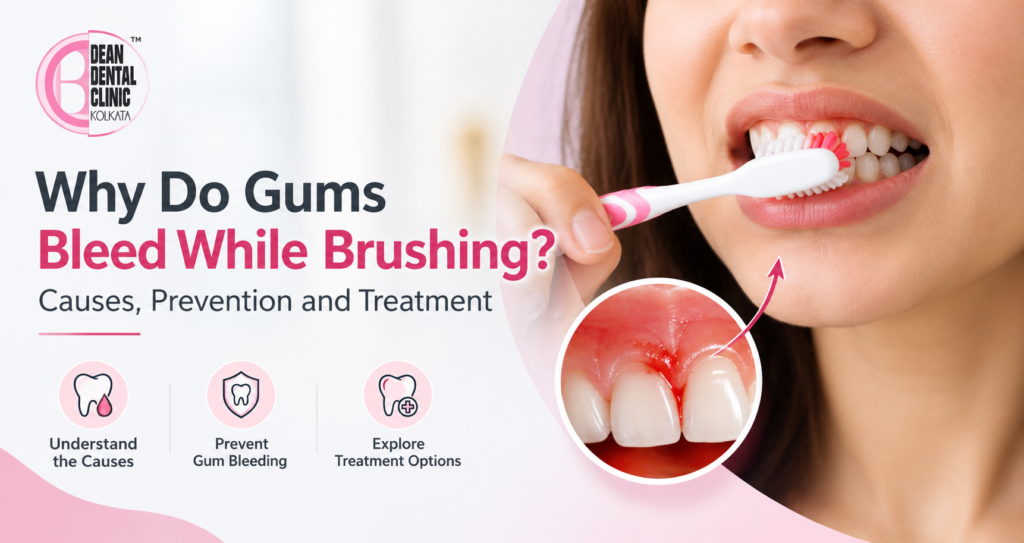
Seeing blood around your toothbrush can be worrying, especially when brushing does not hurt. Bleeding gums are not something to dismiss as part of everyday oral care. They may signal irritation at the gumline, a build-up of dental plaque, or a condition that needs professional attention.
If you have searched “why do gums bleed while brushing,” this guide covers causes, prevention, treatment, and when to seek care.
Why Does Brushing Make Gums Bleed?
Healthy gum tissue should not routinely bleed during gentle brushing. When plaque gathers where teeth meet the gums, bacteria can trigger inflammation. The gums may become red, puffy, tender, or more likely to bleed when touched by a toothbrush or floss.
Bleeding can also follow brushing with too much pressure or using a worn, hard-bristled brush. Repeated bleeding deserves a dental check, even if it is painless.
Six Possible Reasons for Bleeding Gums
1. Gingivitis
Gingivitis is an early form of gum disease caused most often by plaque left on teeth. Inflamed gums may bleed during brushing, look darker than usual, or cause persistent bad breath. Early gingivitis can often be reversed with consistent plaque removal.
2. Hardened plaque near the gumline
When plaque is not removed, it can harden into tartar. This rough deposit gives more plaque a place to collect and can keep the gums irritated. Tartar needs professional removal.
3. Brushing technique or toothbrush choice
Scrubbing forcefully, using stiff bristles, or pressing the brush into the gumline can injure delicate tissue. Choose a soft-bristled brush and use small, gentle movements.
4. Inconsistent cleaning between teeth
A toothbrush cannot reach every surface between teeth. If plaque remains in these spaces, the gum edges may become inflamed and bleed when flossing begins again. Clean between teeth daily with floss or interdental brushes suited to the spaces, using a gentle technique.
5. Hormonal changes or health conditions
Pregnancy, puberty, and other hormonal changes can make gum tissue respond more strongly to plaque. Diabetes may affect gum health and healing. Less commonly, nutritional deficiencies or blood-related conditions may contribute to bleeding. Do not assume the cause is a vitamin deficiency without assessment.
6. Medicines and other factors
Some medicines, including blood thinners, can make bleeding easier or more noticeable. Smoking also raises the risk of gum disease and can interfere with healing. Tell your dentist about medicines you take and any recent changes in your health; never stop a prescribed medicine without advice from the clinician who manages it.
What Should You Do If Your Gums Bleed?
Start by keeping your mouth clean, not by avoiding the area. Use a soft brush twice a day with fluoride toothpaste, spending about two minutes cleaning all tooth surfaces and the gumline. Apply light pressure and angle the bristles gently towards the gums.
Clean between teeth once daily. Replace a toothbrush when its bristles become frayed, and avoid vigorous scrubbing.
Drink water regularly and eat a varied diet that includes vegetables, fruit, and other nutrient-rich foods. Avoid tobacco.
If bleeding continues, arrange an examination rather than repeatedly switching toothpaste or relying on home remedies.
How Are Bleeding Gums Treated?
Treatment depends on what the dentist finds during the examination.
Professional cleaning: If plaque and tartar are present, scaling removes deposits that daily brushing cannot eliminate.
Periodontal treatment: When gum disease has progressed beneath the gumline, deeper cleaning, such as scaling and root planing, may be recommended. More advanced cases can require a periodontist’s care or other procedures.
Managing contributing factors: If a medicine, medical condition, or nutritional issue may be involved, your dentist may coordinate with your doctor. Do not take supplements or stop medication solely because your gums bleed.
During the visit, the dentist may review brushing habits, examine your gums, measure gum pockets, and check for deposits or signs of disease. Sharing your medical history helps the team recommend care that fits your needs.
When Should You See a Dentist?
Book a dental appointment if bleeding happens repeatedly, lasts despite gentle daily cleaning, or comes with swollen gums, persistent bad breath, gum recession, or tooth sensitivity. Loose teeth, pus, increasing swelling, or significant pain need prompt dental attention.
Seek urgent medical care if bleeding is heavy or will not stop, or if it occurs with unexplained bruising or bleeding elsewhere.
FAQs:
Is bleeding while brushing always a sign of gum disease?
No. Brushing injury and some medicines can contribute, but plaque-related gum inflammation is a common cause. A dentist can help identify the reason when bleeding recurs.
Should I stop brushing the bleeding area?
Usually, no. Continue gentle cleaning with a soft-bristled brush. Skipping the area can leave more plaque behind and worsen inflammation. If brushing causes substantial pain or bleeding persists, seek dental advice.
Can bleeding gums stop without treatment?
Mild inflammation may settle when plaque is removed consistently, but tartar cannot be brushed away at home. Persistent bleeding should be examined so that a more serious cause is not missed.
Can a vitamin deficiency cause bleeding gums?
It can, particularly in cases of vitamin C deficiency, but it is not the only explanation.
How quickly should bleeding improve?
It depends on the cause and how advanced the inflammation is. If careful cleaning does not bring improvement, or symptoms worsen, make a dental appointment rather than waiting indefinitely.
Take the Next Step Towards Healthier Gums
Bleeding during brushing is a useful signal to pay attention to your oral health. Gentle daily cleaning, regular dental visits, and early treatment can help prevent a manageable gum problem from progressing.
If your gums bleed regularly, contact Dean Dental Clinic for an assessment and personalised advice. A dental examination can guide appropriate care.
Read More: